
Why Your Dog Isn't Being Bad — Understanding Behavior as Communication
When your dog barks, lunges, or refuses to settle, they're not being defiant. They're communicating. Learn how shifting your perspective can change everything.
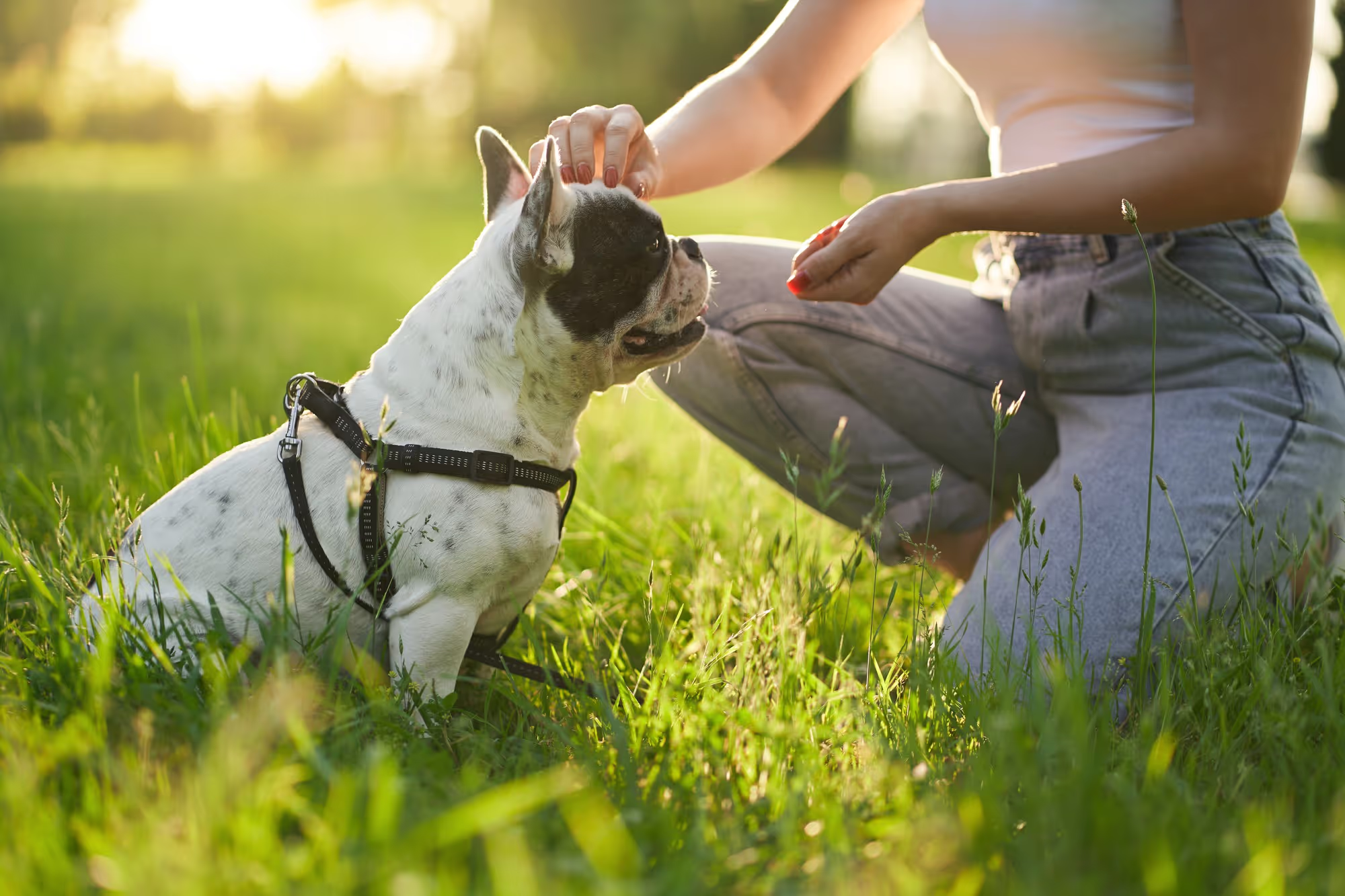
If you've ever looked at your dog mid-bark, mid-lunge, or mid-destruction and thought, "Why are you doing this to me?" — you're not alone.
It's easy to interpret these moments as defiance, stubbornness, or your dog simply being "bad." But here's the truth that changes everything:
Behavior is communication.
Your dog isn't giving you a hard time. They're having a hard time.
What Your Dog Might Be Telling You
Dogs don't have words, so they communicate through behavior. When a dog barks at strangers, they might be saying, "I'm scared and I need distance." When they destroy things while you're gone, they might be saying, "I can't cope with being alone." When they can't settle in the evening, they might be saying, "I'm overstimulated and don't know how to calm down."
These aren't moral failures. They're signals.
The Problem with "Fixing" Behavior
Traditional training often focuses on stopping unwanted behaviors — correcting the bark, punishing the destruction, forcing the settle. But if we only address the surface behavior without understanding what's driving it, we miss the point entirely.
It's like putting tape over a warning light on your car dashboard. The light is off, but the problem isn't solved.
Worse, suppressing behavior without addressing the underlying emotion often creates new problems. A dog who learns not to growl (because growling was punished) may skip the warning and go straight to biting. A dog who is forced to face their fears may become more fearful, not less.
A Different Approach
At The Meditating Mutt, we start by asking: Why is this behavior happening?
Is your dog overwhelmed? Understimulated? Afraid? In pain? Lacking the skills to cope with a situation? Once we understand the root cause, we can address it — and the behavior often resolves naturally.
This doesn't mean we ignore problem behaviors. It means we solve them at the source instead of just managing the symptoms.
What This Looks Like in Practice
Instead of punishing a dog for barking at guests, we help them feel safer around visitors. Instead of forcing a reactive dog to "face their fears," we gradually build positive associations at a pace they can handle. Instead of exhausting a hyper dog with more exercise, we teach them how to actually settle and decompress.
The goal isn't a dog who suppresses their feelings. It's a dog who genuinely feels calmer, safer, and more confident.
The Shift That Changes Everything
When you start seeing your dog's behavior as information rather than defiance, something shifts. Frustration turns to curiosity. Punishment turns to problem-solving. And your relationship deepens.
Your dog isn't being bad. They're doing the best they can with the tools they have. Our job is to give them better tools — and to understand what they've been trying to tell us all along.
What clients are saying
Calm dogs, happy homes

Stay Connected